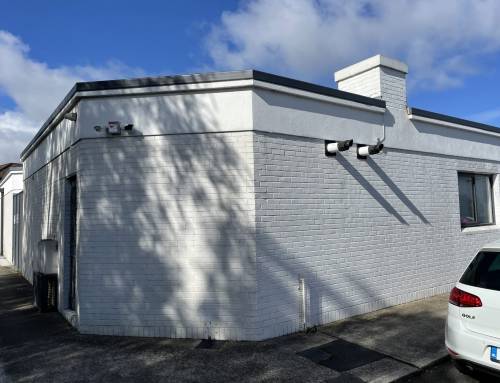
Dalkey Library
Project Overview
Apleona, in partnership with South Dublin County Council, retrofitted Dalkey Library with an all-electric heating solution to eliminate fossil-fuel use, improve comfort, and cut operating emissions.
Scope of Works
- 1 × MasterTherm BoxAir60iS split air-to-water heat pump (≈30 kW @ A7/W55; 35 kW class)
- 10 kW roof-mounted solar PV array with inverter integration
- Decommissioning of legacy fossil-fuel plant and switchover to renewable heating
- Online performance monitoring and optimisation via the MasterTherm server
System Description
The split system uses an inverter-driven compressor and weather compensation to match library load profiles, delivering stable LTHW temperatures for radiator circuits (typ. 45–55 °C) with high seasonal efficiency.
Controls include timed schedules, holiday/night setback and frost protection. Performance data is logged to the MasterTherm cloud for monthly reviews and data-driven optimisation.
Project Results & Benefits
- Fossil fuels eliminated for space heating with a fully electric, renewable plant
- PV generation offsets electrical demand, reducing total CO₂ emissions
- Stable indoor comfort and low acoustic impact for reading and study spaces
- Continuous monitoring enables proactive fine-tuning and high availability
Technical Highlights
- Expected SCOP at 45/35 °C operation in the 3.0–4.0 range (site/load dependent).
- Weather-compensation curve tailored to library hours for smooth supply-temperature control.
- Primary buffer sized ~10–15 L per kW to prevent short cycling and stabilise ΔT across radiator circuits.
- Integrated electricity metering (where fitted) and data export for monthly performance reporting.
- Quiet outdoor unit with inverter fans; low vibration transmission to structure.
Energy & Carbon (SEAI)
Full electrification and PV self-generation materially reduce Scope 1 emissions and overall carbon intensity. Compared with a typical gas baseline, heat-pump operation can deliver substantial CO₂ reductions—further improving as the Irish grid continues to decarbonise.
- Aligned with SEAI decarbonisation objectives for public buildings.
- Suitable for inclusion in SEAI reporting frameworks and potential EXEED-style projects (subject to scheme criteria).